

Poem at 55
We both admit it
I am loving moving much slower now.
My younger self
that fast runner
who went through life like a chain saw
is surprisingly pleased (yet unhappy
resigned perhaps?) to learn
that there are no brackets
that every-thing lives a full life
in between
a single
off-heart-beat.

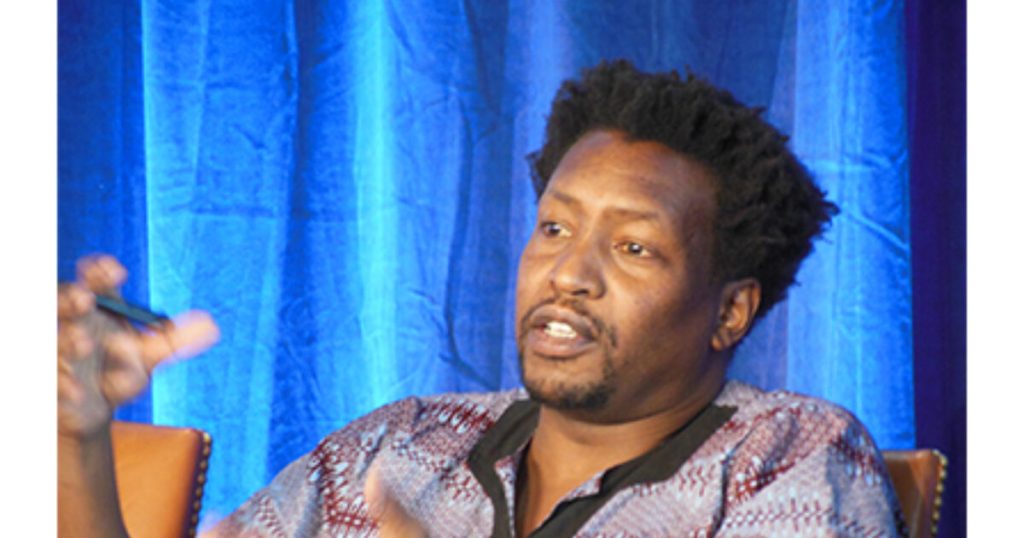
Mũkoma wa Ngũgĩ — Mũkoma wa Ngũgĩ — is one of the most distinctive contemporary voices in Kenyan and African literature, working across poetry, fiction, and critical scholarship with an ease that reflects both intellectual rigor and emotional precision. His writing consistently returns to questions of history, language, and postcolonial identity, often exploring how personal memory intersects with larger political and cultural structures. In his work, the intimate and the collective are never separate; instead, they exist as overlapping registers of experience, where a single life becomes a lens through which broader histories are felt and questioned.
As a writer and scholar, he has long operated within both African and diasporic intellectual spaces, having lived and taught in the United States while maintaining a strong creative and thematic connection to Kenya. This dual positioning informs much of his literary sensibility, where distance becomes a form of clarity and return becomes a form of reckoning. His poetry in particular often reflects on time, movement, and transformation, tracing how identity shifts across geographies and decades, and how aging can reshape one’s relationship to urgency, ambition, and artistic voice.
Within the wider landscape of African literature, Mũkoma wa Ngũgĩ stands among a generation of writers who both inherit and challenge the legacies of earlier literary traditions, including the profound influence of his father, Ngũgĩ wa Thiong’o. Yet his work resists being read only through lineage; instead, it asserts its own aesthetic and political independence, engaging with contemporary realities while remaining deeply attentive to historical continuity. His writing often explores the tension between inherited narratives and lived experience, asking how stories are preserved, revised, or resisted across time.

“Poem at 55” reflects this sensibility with striking clarity, offering a meditation on slowing down, on the shedding of youthful acceleration, and on the quiet recognition that life unfolds not in brackets but in continuous, uncontained presence. At this stage in his work, his poetry feels increasingly attuned to pause and reflection, where meaning is not driven by urgency but by attentiveness. In this way, Mũkoma wa Ngũgĩ continues to shape a body of work that is as intellectually grounded as it is emotionally resonant, marking time not as something to conquer, but as something to inhabit.