

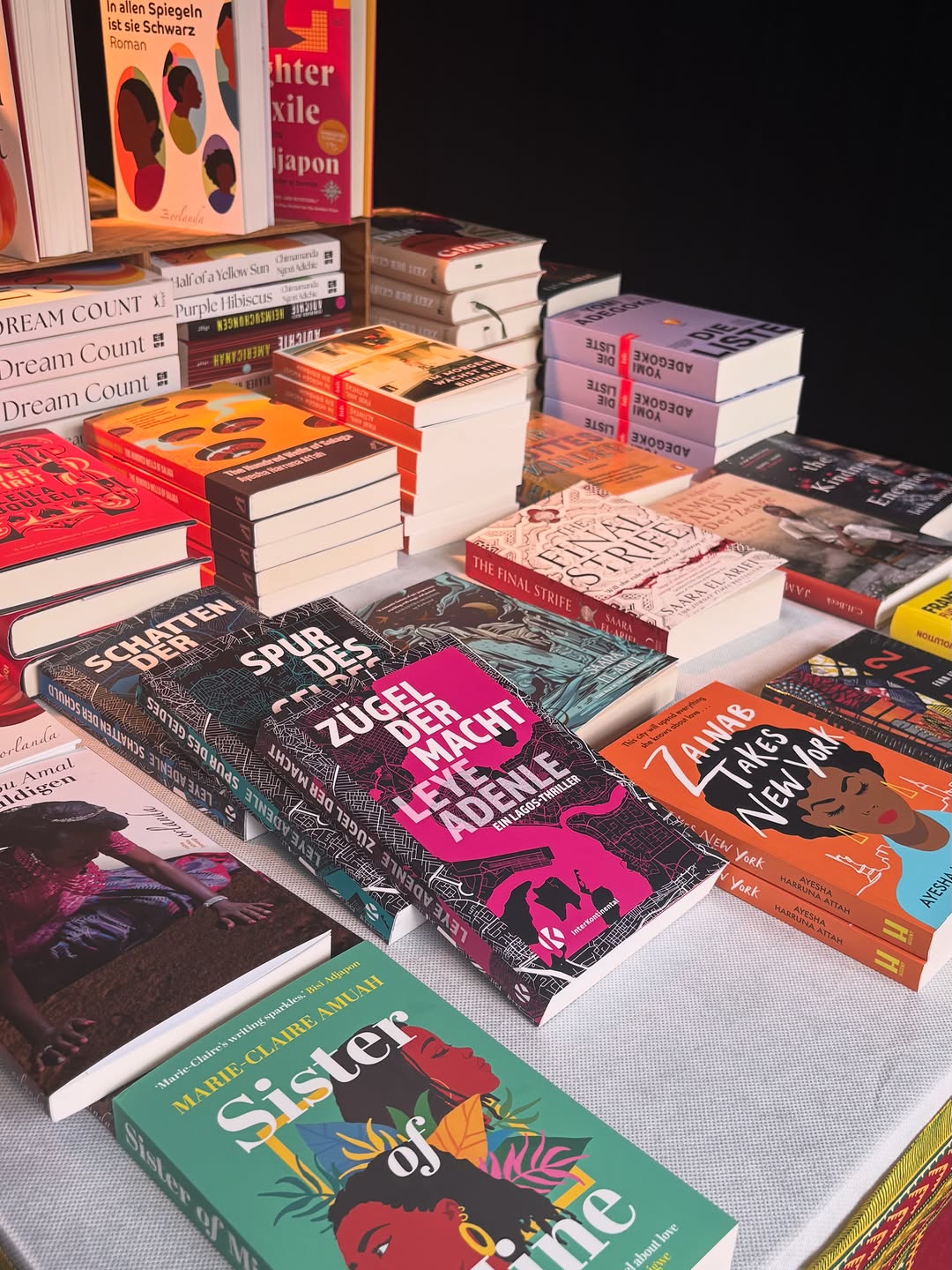
The eighth edition of the African Book Festival Berlin — African Book Festival Berlin 2026 — concluded its three-day run from May 29 to 31 at tak, Theater Aufbau Kreuzberg, delivering a weekend programme that foregrounded collaboration, community curation, and a wide spectrum of contemporary African literary voices.
This year’s edition departed from a traditional single-curator model, instead adopting an open, participatory approach in which programming decisions were shaped through public calls, audience voting, and community input. A creative advisory board featuring Kevin Mwachiro, Chiponda Chimbelu, Ifeatu Nnaobi, Niq Mhlongo, and Edwige-Renée Dro worked alongside the InterKontinental team to bring structure and coherence to a programme defined by its collective authorship. The result was a festival that felt less like a curated showcase and more like a shared space built by its participants.
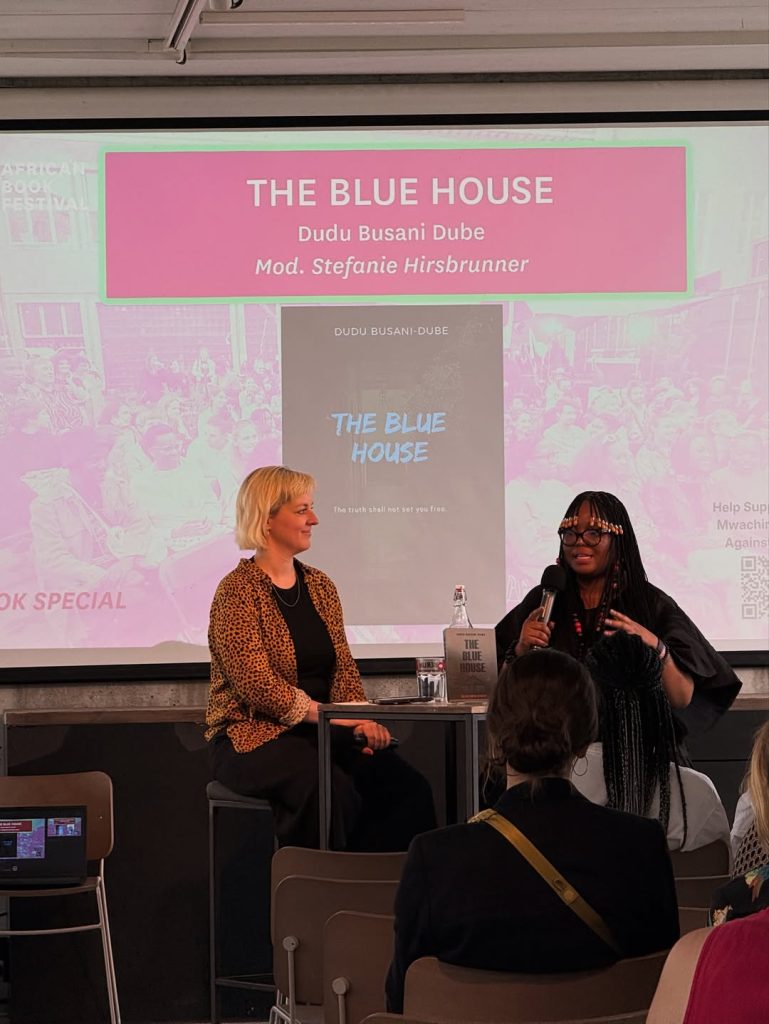
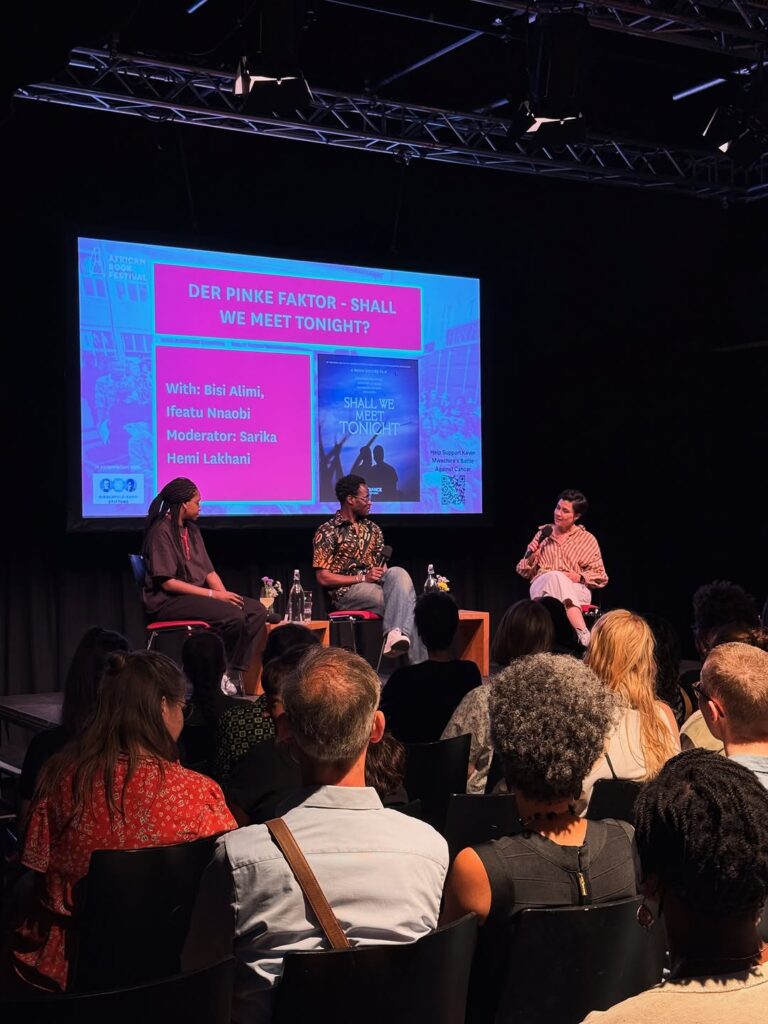
Saturday’s programme unfolded with a dense series of panels and readings featuring writers including Fatin Abbas, Nick Makoha, JJ Bola, Troy Onyango, Dudu Busani-Dube, Stella Gaitano, Nadège Kusanika, and Amat Levin, with conversations circling themes of identity, representation, artistic freedom, and cultural memory. A short film screening and panel titled “Der Pinke Faktor – Shall We Meet Tonight?” created space for more intimate discussion around queer visibility and cultural production, adding a layered visual dimension to the weekend’s literary focus.
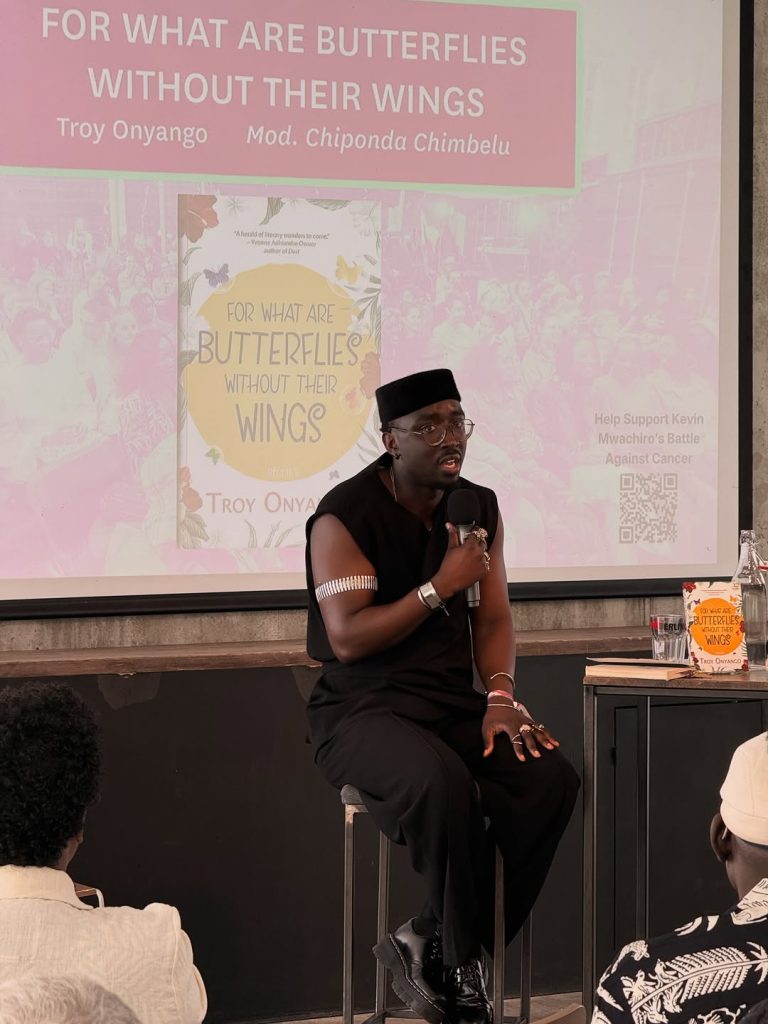
On Sunday, the festival moved into its most reflective and politically engaged programming. The panel “Writing Traumatic Histories” examined how writers engage with archives, memory, and inherited violence across different African contexts, while “Beyond the Message” explored poetry as a form of resistance, solidarity, and linguistic experimentation. Another session, “Men Under Pressure,” turned attention to masculinity, accountability, and shifting social expectations, expanding the festival’s engagement with gendered experience and collective responsibility. Featured books across the day included works by Hemley Boum, Tete Loeper, and Edna Bonhomme, alongside appearances by book clubs such as AKUMA, AFIWI, and Panafro Bookclub, which continued the festival’s tradition of bringing reading communities into direct dialogue.
The weekend concluded with a Poetry Night featuring Jamabie, JJ Bola, Ana Lucão Mvangi, and Nick Makoha, closing the festival with performance-led reflections that underscored the centrality of voice, rhythm, and oral expression in contemporary African literary culture. With its emphasis on participation and shared authorship, the 2026 edition of the African Book Festival Berlin reaffirmed itself as a space where African and diasporic writing is not only presented but actively co-created in dialogue with its audiences.