

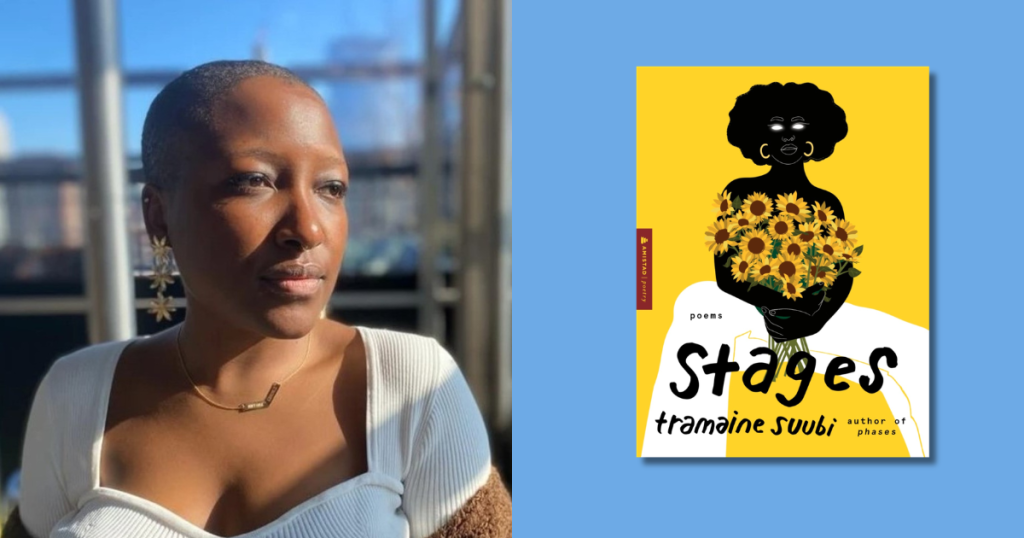
Tramaine Suubi is an Ugandan-American poet, editor, and multidisciplinary writer whose debut collection phases and sophomore collection stages have positioned her as one of the most urgent voices in contemporary African poetry. Quadrilingual in English, French, Luganda, and Runyankore, she has worked as managing editor of the Kampala-based Pan-African literary initiative Writivism, assistant editor at The Weganda Review, and guest editor whose thematic framing of kitalo, a Luganda word for grief, shaped an entire issue of Yellow Arrow Journal, and she is currently writing both a novel and a play.
Born in Uganda and now living between Uganda and the United States, Suubi’s work exists at the crossroads of the personal and political, the celestial and the grounded, with her poetry shaped by MFA training, chronic illness, physical and mental healthcare, and a commitment to collective liberation that rejects the myth of the solitary poet, while she has also spoken openly about the politics of African literary prizes, the extractive logics embedded in artificial intelligence, and the way diaspora both fractures and expands a writer’s voice, with a clear admiration for June Jordan underpinning much of her thinking.
We spoke with Suubi about what it means to love Uganda without conflating its people with its institutions, how she maps the landscape of Ugandan poetry from Okot p’Bitek to emerging contemporary voices, and why she is choosing to let her next collection breathe in silence for a decade before it meets publication.
Brittle Paper
You’ve described Uganda as a country where literature is “fighting to survive,” with increasing pressure on freedom of speech, press, and assembly, yet it is also central to your identity as a writer, so how do you hold that tension between love for a place and awareness of its political constraints?
Tramaine Suubi
My framework of love is deeply influenced by bell hooks’ All About Love, 1 Corinthians 13, and my older sister, all of which I find both fallible and instructive, and through them I have learned less to hold the tension and more to live within it, because existing between Uganda and the United States means existing inside contradiction where survival is both literal and literary, and for me a place is defined by its people rather than its institutions, which means I can love my people while also holding them accountable, I can love my birthplace without conflating individuals with systems, and I can accept multiple truths at the same time, especially since there are many people within Uganda actively fighting for free expression and resisting repression, and I align myself with that work while maintaining the belief that our literature will outlast any regime or any external force attempting to define it.
Brittle Paper
Ugandan poetry has a rich lineage from Okot p’Bitek’s Song of Lawino to contemporary poets such as Ber Anena, Mildred Barya, and Arao Ameny, and for readers encountering this tradition through your work, how would you map that landscape and what threads connect these generations?
Tramaine Suubi
I have Song of Lawino & Song of Ocol, A Nation in Labour, and The Price of Memory in my personal collection, and I also continue to hope that Arao Ameny releases a full poetry collection one day, especially since I have taught “Home is a Woman” in multiple workshops, and when thinking about Ugandan poetry I often suggest reading in reverse chronology, beginning with contemporary work such as Jedidiah Mugarura’s forthcoming Nyamuteza, then moving to Stella Nyanzi’s Exiled for My Mouth and in particular “Museveni Birth Date a Wasted Day” which marked a turning point in her exile, followed by Hope Wabuke’s The Body Family and other FEMRITE-associated writers including Beverly Nambozo, before finally returning to oral traditions and archived folk poetics from Karamoja, Acholi, Toro, Nkore, and Buganda, because that is where the literary landscape ultimately begins.
Brittle Paper
You’ve spoken about the complex position of diaspora as both limitation and gift, so does living between Uganda and the United States change the voice of a poet, and how has it shaped your own writing?
Tramaine Suubi
Diaspora produces a wide range of effects on poetic voice, including liminality, fragmentation, expansion, and a persistent undertone of grief, though these effects vary depending on how one enters diaspora, whether as an asylee, refugee, student, or worker, and in my own case it has created a fracture that is also a kind of widening, where I lost any singular sense of belonging but gained a kaleidoscopic way of seeing, and living between two neocolonial contexts has made me hyper-aware to the point that I cannot stop noticing things even when I try, and that condition of attention becomes both burden and gift, because attention, ultimately, can be a potent form of love.
Brittle Paper
As a quadrilingual writer working in English, French, Luganda, and Runyankore, how does multilingualism shape your poetry structurally rather than just stylistically, and which poets working across languages influence you?
Tramaine Suubi
I am glad you point out that multilingualism functions in my work not only as texture but as structure, because it shapes how a poem thinks and how it is built, and I draw inspiration from poets such as Karwitha Kirimi, Adedayo Agarau, Yalie Saweda Kamara, I.S. Jones, Manthipe Moila, Yrsa Daley-Ward, Warsan Shire, and Ijeoma Umebinyuo, while also recognising that multilingual poetics produces density, emotional range, and empathy alongside a certain risk of illegibility in a distracted world, though I ultimately believe that its expressive and political possibilities outweigh those costs.
Brittle Paper
If you were tasked with designing a Pan-African poetry syllabus, what would you include and what guiding logic would shape your selections?
Tramaine Suubi
I would begin with Phillis Wheatley’s Complete Writings as a foundational point, followed by M. NourBeSe Philip’s Zong! for its radical form and historical intervention, then Langston Hughes’ Collected Poems as a central figure of the Harlem Renaissance whose influence extends into Négritude, alongside Aimé Césaire and Léopold Sédar Senghor in bilingual collected editions, before moving to Ntozake Shange’s for colored girls who have considered suicide / when the rainbow is enuf, then June Jordan’s Directed by Desire, and continuing with Mazisi Kunene’s Echoes from the Mountain, Rita Dove’s Thomas and Beulah, and finally Kwame Dawes’ Sturge Town, because together these works trace overlapping geographies, languages, and histories of the African diaspora.
Brittle Paper
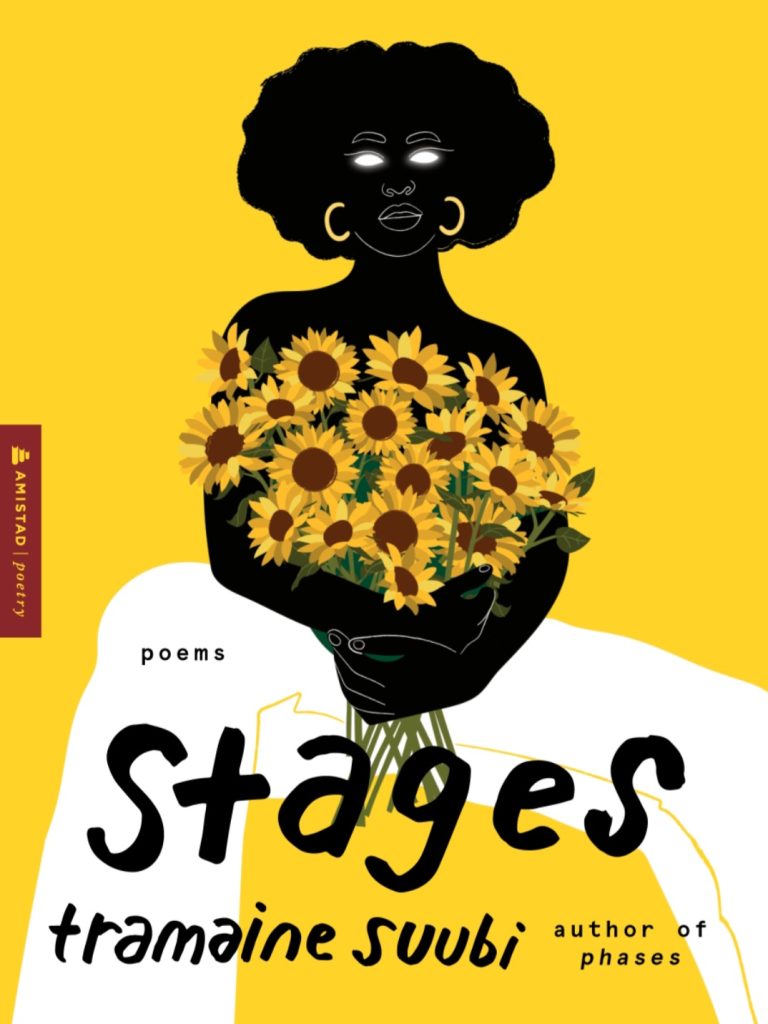
Your collections move from phases, centred on the moon, to stages, centred on the sun, so what does that shift represent thematically and formally?
Tramaine Suubi
The shift reflects maturity, breadth, and doubt, where phases is shaped by interiority and constraint and was written before formal academic training, while stages emerges from and beyond my MFA experience with greater ambition and scepticism, and although the moon has often been culturally coded as feminine and the sun as masculine across various traditions, both of which I consider flawed projections, I consciously worked through and against those binaries in order to explore multiplicity, precision, and opacity rather than remain orbiting a single symbolic centre.
Brittle Paper
What do you believe African poetry, and Ugandan poetry specifically, is capable of that other literary forms are not?
Tramaine Suubi
African poetry carries witness, endurance, and shapeshifting in ways that are deeply embodied, and Ugandan poetry in particular tends to be direct, unembellished, and structurally rooted in preservation and lament, often functioning as an archive of grief, rage, and memory that might otherwise be silenced, and in this sense it performs a form of cultural and emotional transmission that is both elegiac and generative, closer at times to communal mourning practices than to isolated literary production.
Brittle Paper
You have worked closely with Writivism and have spoken about the politics of African literary prizes, so which emerging writers stand out to you as under-recognised?
Tramaine Suubi
I continue to stand by my critique of the literary prize ecosystem and its structural contradictions, especially given how funding constraints have placed initiatives like Writivism on pause, but I also remain grateful for the writers it introduced me to, including Davina Philomena Kawuma, Maryhilda Obasiota Ibe, and Sanni Omodolapo, whose work engages subversion in ways I find both precise and enduring, and I hope their books reach wider readerships in the near future.
Brittle Paper
As your career has expanded into publishing, editing, and multiple forthcoming projects, how do you maintain honesty in your poetry under increased visibility and expectation?
Tramaine Suubi
I have had to slow down significantly, since my first two collections took nearly eight years to complete and I sometimes miss the early freedom of writing without external pressure, so I now intend to let my next collection rest for at least a decade while I complete other forms such as a novel and a play, and I also protect my honesty by limiting my public exposure, reducing my social media presence, relying on therapy and healthcare support, and learning to avoid external validation loops, because honesty in writing is inseparable from honesty in life, and I try to extend that discipline across both.
Brittle Paper
You’ve argued that poetry is fundamentally collective rather than solitary, so how do you reconcile that with its deeply personal nature, and what would you say to young poets in Uganda and across the continent?
Tramaine Suubi
I do not believe poetry is truly solitary, even if it begins in interiority, because the idea of the isolated poet is largely a myth rooted in classed and Western notions of authorship, while historically poetry has always been communal, from oral traditions and griots to contemporary spoken word cultures, and even when written alone poems exist in constant dialogue with prior voices, languages, and histories, so that what feels personal is always already collective in origin and in reception, and when we share poetry beyond publication it becomes even more explicitly communal, while to young poets I would say that attention is both responsibility and gift, that reading and listening are essential disciplines, that poetic survival requires care and critical awareness of the systems around you, and that there is no final arrival in poetry, only continuous becoming and lifelong practice until we return to the earth.